
Visual Novels vs. 3D Adult Simulators: Which NSFW Genre Suits Your Fantasies?
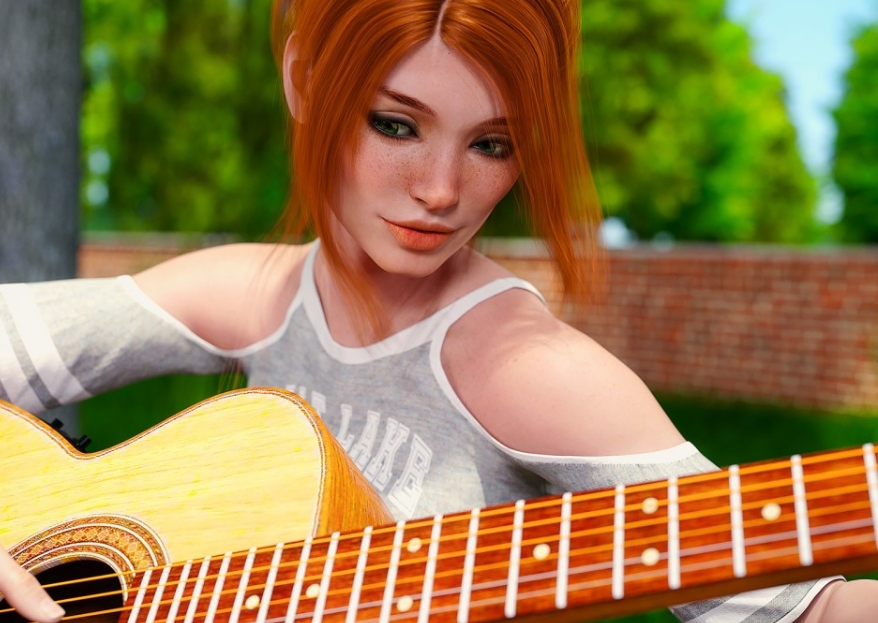
The world of adult gaming offers two dominant paths: the narrative-rich world of Visual Novels and the interactive sandbox of 3D Adult Simulators. Choosing between them isn’t about finding the «best» genre, but discovering which one aligns with your personal desires for storytelling, control, and aesthetic. One immerses you in a crafted story where you fall in love with characters, while the other hands you the director’s chair to orchestrate every detail. Let’s dive into a detailed comparison to help you find your perfect digital escape.
«If you want to fall in love with a character, play a Visual Novel. If you want to control every movement, go for a 3D Simulator.»
The Aesthetic Appeal: Art Style and Visual Fidelity
The most immediate difference lies in their visual presentation, which fundamentally shapes the experience.
Visual Novels: The Mastery of 2D and 2.5D Art
Visual novels are a celebration of illustrative art. They rely on beautifully drawn static CGs, detailed character sprites, and evocative backgrounds. The focus is on artistic expression—from the delicate linework of a character’s face to the dramatic, high-impact CG gallery scenes that serve as rewards for story progression. 2.5D elements, like subtly animated sprites or layered backgrounds, add a sense of life without breaking the painterly illusion. The strength here isn’t realism, but emotional resonance and stylistic beauty.
3D Simulators: Realism and Fluid Physics

3D simulators prioritize realism and dynamic presence. Using engines like Unity or Unreal, they create characters and environments you can view from any angle. The appeal is in the real-time rendering, fluid animations, and physics-based interactions (think clothing, hair, and… well, everything). The visual goal is a believable, interactive dollhouse where lighting, textures, and model fidelity create a sense of tangible reality, even if it sometimes falls into the «uncanny valley.»
Gameplay Mechanics: Reading vs. Interaction
This is the core divide in how you engage with the content.
- Visual Novels are primarily choice-based narratives. Gameplay revolves around reading text, making dialogue or plot choices, and navigating branching paths. Interaction is mental and emotional, as you guide the protagonist through relationships and story twists. It’s a curated experience.
- 3D Simulators are sandbox adult simulators. Gameplay is about direct control: positioning characters, adjusting poses, customizing appearances in real-time, and manipulating the environment. The interaction is tactile and immediate, offering a playground for your creativity and specific fantasies.
Storytelling Depth: Why Visual Novels Rule the Narrative
If you crave a compelling plot, visual novels are unmatched. They are, at their heart, interactive books. Genres range from slow-burn romance and gripping drama to supernatural thrillers and comedies. Titles like Acting Lessons or The Last Sovereign deliver narrative depth and character development that can rival mainstream media. The immersive storytelling is the main event, with adult scenes serving as emotional payoffs within that narrative.
While 3D simulators often have minimal or generic plots, the landscape is changing. Story-driven adult games like Subverse or Paradise Lust are blending 3D presentation with substantial narratives, blurring the traditional lines between genres.
Customization and Modding: The Power of 3D Sandbox Games
This is where 3D simulators shine with unparalleled freedom.
The best 3D simulators feature extensive character creators with hundreds of sliders for body proportions, facial features, skin details, and clothing. This allows you to build literally anyone you imagine. Furthermore, the modding community is a powerhouse, constantly creating new characters, outfits, animations, and environments. This endless stream of user-generated content massively extends the life and appeal of these games.
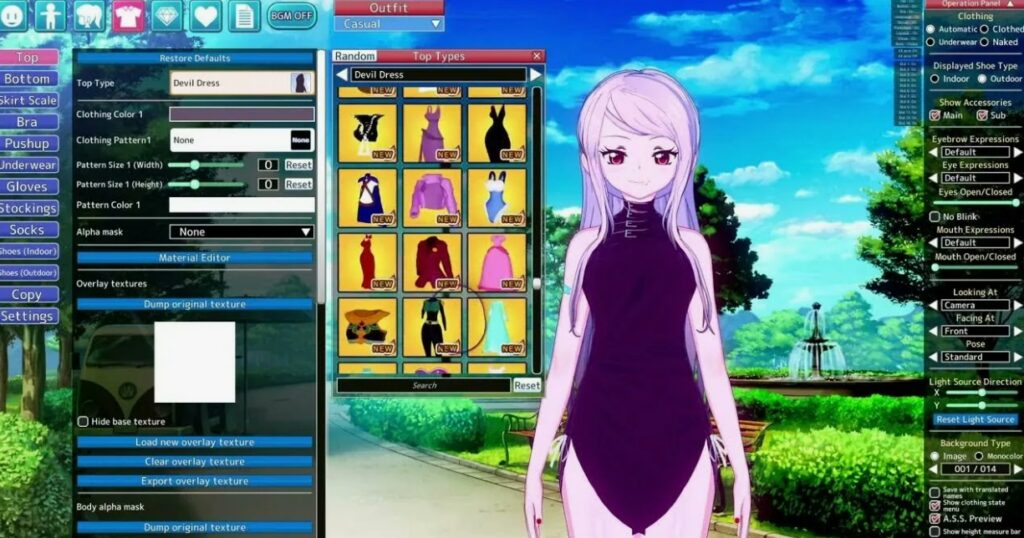
Visual novels, in contrast, offer little to no physical customization of characters. Your agency lies in narrative choices, not in appearance. Modding exists but is usually focused on translation patches or fan-made routes, not asset creation.
Performance and Accessibility: PC vs. Mobile Compatibility
Your hardware plays a role in what you can comfortably enjoy.
| Критерий | Визуальные Новеллы | 3D Симуляторы |
| Graphics (Графика) | 2D/2.5D иллюстрации, Static CGs | Real-time rendering, 3D модели, динамическое освещение |
| Story (Сюжет) | Глубокий, choice-based narrative | Минимальный или базовый, акцент на геймплее |
| Interactivity (Интерактивность) | Выбор в диалогах, branching paths | Прямой контроль, sandbox, кастомизация всего |
| Hardware Requirements | Низкие, работают на старых ПК и часто на мобильных | Высокие, требуют мощной видеокарты для fluid animations |
Visual novels, often built in Ren’Py, are incredibly lightweight. This makes them perfect for older PCs and, crucially, for mobile (Android) play through apps like JoiPlay. You can enjoy a full narrative experience on a tablet or phone.
3D simulators are hardware-intensive. High-quality rendering, physics, and real-time lighting demand a capable dedicated GPU (graphics card). They are predominantly PC experiences, and their large file sizes (often 20GB+) reflect the high-quality 3D assets.
Which One Should You Choose? (Final Verdict)
Your choice hinges on what you value most in an immersive adult experience.
Choose a Visual Novel if you:
- Prioritize storytelling depth and emotional connection with characters.
- Appreciate hand-drawn artistic style over realistic graphics.
- Enjoy making meaningful choices that shape a narrative.
- Want to play on a wider range of devices, including mobile.
- Prefer a curated, director-led experience with powerful payoff scenes.
Choose a 3D Adult Simulator if you:
- Value interactivity, control, and creative freedom above all.
- Want to customize every aspect of characters and scenes.
- Are fascinated by physics, realism, and real-time animation.
- Have a capable gaming PC to handle the hardware requirements.
- Enjoy a sandbox-style playground for your fantasies over a linear story.
Conclusion
The debate between visual novels and 3D adult simulators isn’t about superiority, but about purpose. They cater to different, though sometimes overlapping, desires. The visual novel is an interactive romance or drama novel, where the journey is in the heart and mind. The 3D simulator is a digital workshop, where the satisfaction comes from creation and direct control. As the genres evolve, we see more hybrids emerging, promising the best of both worlds. For now, identify what you seek—a captivating story or a boundless sandbox—and let that guide your choice into the vast, exciting world of adult gaming.
Frequently Asked Questions (FAQ)
Visual novels are significantly better suited for mobile. Most are built on the lightweight Ren’Py engine and can be easily played on Android using the JoiPlay app. 3D simulators are too demanding for most mobile hardware and are designed for PC.
Yes, the line is blurring. Games like Subverse (space adventure), Paradise Lust (comedy survival), and House Party (social puzzle) are examples of 3D-focused games that incorporate stronger, more engaging narratives alongside their interactive elements.
This is due to the high-cost 3D assets (models, textures, animations) and the complex rendering technology required. Each character model, outfit, and environment is a detailed 3D object with high-resolution textures, resulting in large game files (often 10-50GB). Visual novels use compressed 2D images, which are much smaller.
In the context of visual novels, 2.5D typically refers to the use of techniques that add a sense of depth to 2D art. This can include animated sprites with blinking eyes or moving hair, layered backgrounds that parallax-scroll, or Live2D technology that allows for subtle, dynamic movement of 2D illustrations, making characters feel more alive without being full 3D models.
Other articles
 None
None
 None
None
 About new products
 None
None
 Back
Back
 None
None
 None
None
 None
None
 None
None

