
Digital Silk and Latex: The Best Adult Games for Realistic Clothing Physics (2026)

In the realm of high-end NSFW gaming, the way a dress flows or a leather strap stretches tells a story more powerful than words. For years, the adult gaming community focused almost exclusively on the fidelity of skin shaders and soft-body simulations. But as we move further into 2026, a new aesthetic frontier has emerged: clothing. Realistic fabric physics are no longer a «nice-to-have» feature; they are the primary marker of a premium, immersive experience. This article explores the technology and the top titles that are setting the standard for digital textiles.
The Evolution of Fabric: Why Realistic Clothing Matters in NSFW Gaming
Moving beyond static, painted-on clothing changes the fundamental aesthetic of an adult scene. A glossy Latex catsuit that stretches and reflects neon light feels entirely different from a delicate piece of Lace that drapes softly over a character’s body. High-fidelity Cloth simulation allows developers to convey a sense of weight, texture, and tension. Whether it is the tight compression of a tactical vest or the fluid sway of a silk robe, these details trigger the viewer’s sense of «visual tactility.» In 2026, the most effective NSFW experiences use clothing not just as a cosmetic layer, but as a dynamic storytelling tool.
The Tech Behind the Look: Physics Engines and Shaders
To achieve this level of realism, developers rely on a combination of three specific technologies. Understanding these helps players know exactly which settings to prioritize.
Cloth Simulation (PhysX & Havok): Beyond Static Meshes
The first pillar is dynamic movement. Legacy titles often used rigid meshes that deformed unnaturally with movement, resulting in the infamous «cardboard dress» effect. Modern titles utilize advanced middleware like NVIDIA PhysX and Havok Cloth to handle the complex math of inertia and gravity. For instance, the NvCloth library, derived from PhysX 4.0, allows developers to apply realistic wind, gravity, and collision forces to clothing in real-time. This means that a character’s skirt doesn’t clip through their legs as much as it naturally wraps around them.
PBR Textures (Physically Based Rendering): The Secret to Material Identity
Dynamic movement is useless if the surface looks fake. PBR (Physically Based Rendering) is the gold standard for lighting in 2026. Unlike older shaders that looked plastic, PBR maps define exactly how rough or smooth a fabric is (Roughness maps) and how light bounces off metallic threads (Metallic maps). Games utilizing high-end PBR shaders can differentiate between the matte finish of cotton and the high-gloss reflection of Vinyl, reacting naturally to changing light sources from scene to scene.
Collision Detection: Avoiding «Clipping» Issues
The nemesis of all 3D art is Clipping—where polygons of clothing pass straight through a character’s skin. The best fabric physics engines now implement sophisticated collision detection hierarchies. Rather than just checking the outer skin of the character, modern games use «double-sided» collision proxies and inter-collision particles. This prevents folds of a dress from penetrating each other and ensures that a leather jacket stays firmly on the character’s shoulders rather than phasing inside the torso during extreme movement.
Top Adult Games with the Best Clothing Physics in 2026
Here is our curated list of the titles leading the charge in digital textile engineering.
1. Virt-A-Mate (VaM) – The Gold Standard of Soft Physics
Virt-A-Mate remains the undisputed technical king. It is less a game and more a creative sandbox where the user has absolute control over every simulation setting. The project aims to create realistic characters using joint control, soft body physics, physics hair, cloth simulation, and accurate collisions. In VaM, you can adjust the «Stiffness» and «Damping» values of a silk dress in real-time. It supports both PhysX and GPU acceleration, allowing for hyper-realistic draping of multiple layers of fabric. While it demands a high-end GPU, the resulting photorealism—especially with skin-accurate collisions—is currently the benchmark for the industry.
2. Honey Select 2 (Libido DX) – The Modding Fashion Capital

Without mods, Honey Select 2 is a standard game. With mods, specifically the HS2-HF Patch, it becomes a fashion powerhouse. The community has produced thousands of clothing assets using advanced Material Editor plugins and overlay mods that allow for realistic transparency effects and fabric behavior. Unique mods like ClothColliders specifically add physical response zones to fabrics, allowing skirts and jackets to react dynamically when they come into contact with hands or objects. For players who want a limitless high-fashion wardrobe with customizable material gloss, this is the top pick.
3. Captain Hardcore – Sci-Fi Textures and VR Presence
Captain Hardcore bridges the gap between accessibility and high performance, especially in VR. It features full-body physics with dynamic posing and a «deep sexual sandbox» atmosphere. The game focuses heavily on material diversity, specifically high-gloss Latex and industrial fabrics common in space opera settings. In 2026, its ability to simulate fabric clinging to wet skin (through specular mapping) and the tearing mechanics of specific sci-fi uniforms makes it a standout for fans of cyberpunk and space aesthetics.
4. Fallen Doll: Operation Lovecraft – Cinematic Fabric Weight
Project Helius’s Fallen Doll utilizes the Unreal Engine to deliver some of the most cinematic fabric rendering available. The game features dynamic cloth simulation synchronized with high-framerate motion capture. The «weight» of the fabrics—how heavy a velvet robe feels versus how light a nylon nightie moves—is exceptionally well realized here. It also supports RTX optical flow for motion blur on moving fabric, ensuring that cloth doesn’t look jittery during intense scenes.
5. Wild Life (Ongoing Beta) – Organic Material Physics
Wild Life is an open-world adult RPG focusing on environmental interaction. Its unique selling point is how fabric reacts to the external environment—wind, water saturation, and physical force. The game features an open-world physics system where cloaks get caught on bushes and wet clothing sticks dynamically to the character model, requiring complex collision and inter-collision calculations. It is a must-watch for those who want clothing physics that react to the world rather than just the player’s direct pose.
Comparison Table of Top Titles:
| Game | Fabric Physics Quality | Material Fidelity (PBR) | Collision Detection | Hardware Impact |
| Virt-A-Mate | Excellent (Soft body + NvCloth) | Studio-grade | Skin-accurate, multi-layer | Very High (GPU heavy) |
| Honey Select 2 (Modded) | Good (Community Physics mods) | High (Material Editor) | Basic with Collider mods | Medium |
| Captain Hardcore | Very Good (Full body IK) | High (Sci-Fi Latex focus) | Good (VR optimized) | Medium-High |
| Fallen Doll | Very Good (UE4 Sim) | Excellent (Cinematic focus) | Solid, motion-blurred | High |
| Wild Life (Beta) | Good (Open-world reactive) | Very Good | High (Environmental hitboxes) | High |
The Rise of Digital Tailoring: Tools for Custom NSFW Outfits
The best outfits in these games aren’t always made by the developers. The rise of community modding has introduced professional-grade software into the adult pipeline.
Marvelous Designer is the industry standard for creating ultra-realistic clothing. It is based on real-world sewing patterns, allowing creators to stitch digital fabric together virtually. When imported into Unreal Engine or Unity, these assets retain their physical properties—silk will crease differently than leather. Many high-end mods for the games listed above are crafted by taking a base mesh from Marvelous Designer, refining it in ZBrush, and texturing with PBR workflows in Substance Painter. If you see a mod with «cloth weight» that looks perfect, it was likely made with this toolset.
Hardware Impact: Why Realistic Fabrics Demand More VRAM
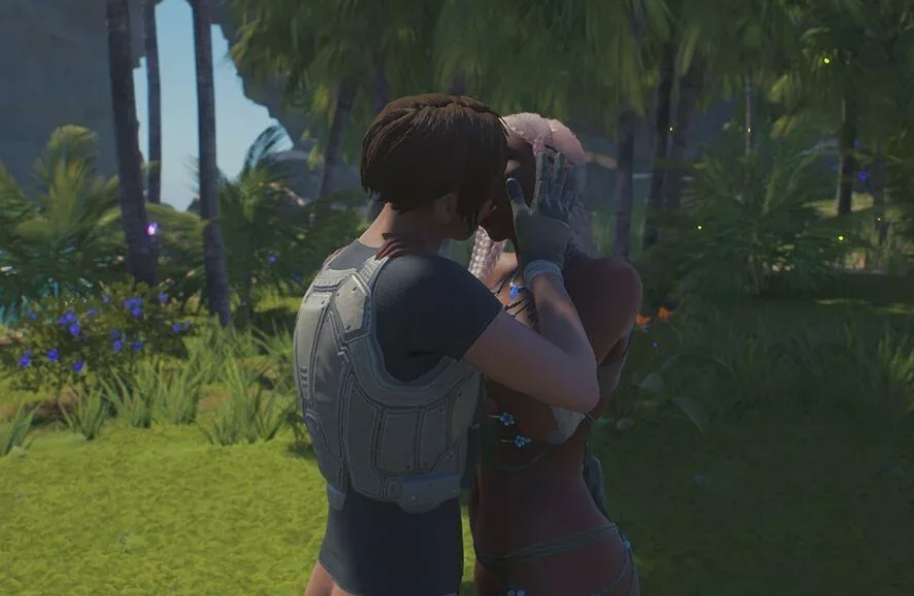
Realistic clothing comes at a significant computational cost. Cloth simulation is genuinely one of the hardest problems in game development, requiring real-time physics simulation of thousands of vertices while maintaining 60 frames per second.
In high-end titles like Virt-A-Mate, enabling high-quality Cloth simulation can consume massive amounts of VRAM and processing power. Many users report that disabling cloth simulation can increase power efficiency by up to 30% and sometimes double the FPS (Frames Per Second), though the trade-off is that clothing stops moving dynamically. If you are playing in VR, loading multiple 4K PBR textures with transparency maps (like lace) can quickly cause stuttering or crashes on cards with less than 8GB of VRAM. For a smooth 4K experience, a GPU with 12GB or more is highly recommended.
Conclusion
The era of static body suits and rigid capes is over. As we progress through 2026, Cloth simulation and PBR materials are what separate amateur productions from blockbuster NSFW experiences. Whether you are appreciating the soft-body collisions of Virt-A-Mate, the modded high-fashion of Honey Select 2, or the reactive wet fabrics of Wild Life, your eyes are now trained to look for the details. When the fabric breathes, stretches, and flows with the character, the digital illusion is complete.
FAQ
Yes, generally. While basic physics can run on mid-range cards, achieving high-fidelity 4K cloth simulation with collision detection and PBR textures requires a significant amount of VRAM. For a smooth 60 FPS experience in games like VaM, an RTX 3070 or higher is recommended. Lowering the «Simulation Resolution» in the game settings is the best way to reclaim performance without turning physics off entirely.
Absolutely, but the tools vary. Games like Honey Select 2 and Virt-A-Mate have robust modding communities that allow you to import custom assets. You will need software like Marvelous Designer (for realistic sewing patterns) and Blender (for rigging). The industry standard pipeline involves creating the base pattern in MD, sculpting details in ZBrush, painting PBR textures, and finally importing the skinned mesh into the game.
Captain Hardcore is generally regarded as the leader for latex and leather. Its PBR shaders handle the high-specular «gloss» of latex perfectly, and its skin collision system allows the tight fabric to stretch realistically over muscle and fat groups without visible clipping. For pure visual quality of glossy materials, Virt-A-Mate also holds a strong position, though it requires more technical tweaking.
Clipping is when 3D polygons of clothing intersect with body geometry, creating a visual glitch where the skin pokes through the shirt. You can fix this by adjusting the «Collision Radius» settings in physics-heavy games. Many modern mods include «Cloth Collider» plugins that add invisible collision boxes to the character’s skin, forcing the fabric to stay on the outside. However, because cloth simulation is so demanding, some clipping during extreme poses is often unavoidable without a top-end graphics card.
Other articles
 News
News
 None
None
 None
None
 None
None
 Back
Back
 News
News
 None
None
 None
None
None
None

